
Designing Fuzzy Classifiers that Know Their Limits: Accuracy, Cost, and Partial Interpretability
8/11 13:00~13:50
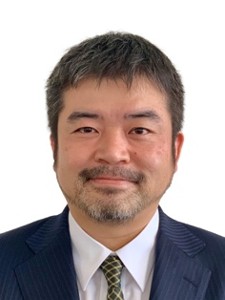
Prof. Yusuke Nojima
Professor, Graduate School of Informatics,
Osaka Metropolitan University
Japan
Abstract
Fuzzy rule-based classifiers have long attracted attention as interpretable AI models because they can explain the rationale behind their decisions through the antecedent conditions of their fuzzy rules. However, ensuring the reliability of classification results remains a major challenge, especially in critical fields such as medicine and finance, where misclassification can significantly harm users. This talk presents a series of studies on evolutionary fuzzy classifier design with reject options that withhold unreliable classifications near decision boundaries. Although conventional threshold-based reject options improve reliability, they often reject more patterns than necessary. To address this, we first introduce a two-stage reject option in which a machine learning model serves as a second opinion: if the fuzzy classifier and the second-opinion model agree, the rejection is withdrawn, achieving a better accuracy-rejection trade-off. Second, we present a hierarchical fuzzy classifier that uses rejection as a relay mechanism among classifiers of varying complexity obtained via multiobjective fuzzy genetics-based machine learning, substantially reducing the average number of attributes required for inference. Third, we describe a partially interpretable model that applies an interpretable fuzzy classifier to as many patterns as possible while deferring hard patterns to an accurate black-box model. Finally, we discuss design principles for trustworthy AI systems that know when not to decide.
Biography:
Yusuke Nojima received the B.S. and M.S. degrees in Mechanical Engineering from Osaka Institute of Technology, Osaka, Japan, in 1999 and 2001, respectively, and the Ph.D. degree in System Function Science from Kobe University, Hyogo, Japan, in 2004. From 2004 to 2022, he was with Osaka Prefecture University, Osaka, Japan, where he became a Professor in the Department of Computer Science and Intelligent Systems in October 2020. Since April 2022, he has been a Professor in the Department of Core Informatics, Graduate School of Informatics, Osaka Metropolitan University, Osaka, Japan. Since April 2026, he has also served as Vice Dean of the Graduate School of Informatics. His research interests include evolutionary fuzzy systems, evolutionary multiobjective optimization, and multiobjective data mining. He has published 70 international journal papers and over 270 international conference papers and was selected as one of the World’s Top 2% Scientists (Elsevier/Stanford citation indicators, August 2025 update). He was a guest editor for several special issues of international journals, chaired the Task Forces on Evolutionary Fuzzy Systems and on Competitions within the Fuzzy Systems Technical Committee of the IEEE Computational Intelligence Society, and served as an Associate Editor of IEEE Computational Intelligence Magazine. He is currently President-Elect of the International Fuzzy Systems Association (IFSA).